Worried a blade will tear your paper or slip and cut you? The best craft knife for paper is a slim precision handle with a fresh fine-point #11 blade, used on a mat with a metal ruler.
This guide is part of our look at paper cutting tools, and it focuses on the knife itself.
| Item | Key fact |
|---|---|
| Best blade shape for paper | #11 fine point, suited to paper cutting and scoring |
| Knife style for detail work | Slim, replaceable-blade precision handle |
| Best ruler type | Metal with a cork bottom |
| Grip distance from the blade | At least a half inch above the blade |
| Dull blade risk | Needs more pressure, so it is more likely to slip |
Figures come from retailer and hobby guides, such as Excel Blades’ knife guide and Offbeat Home’s X-Acto tips. They can change, so check the source before you rely on them.
What a craft knife is and why paper needs one
A craft knife is also called a hobby knife, precision knife or utility knife, depending on who you ask. Scissors handle straight trims well, but they struggle with tight curves, inner windows and fine lettering.
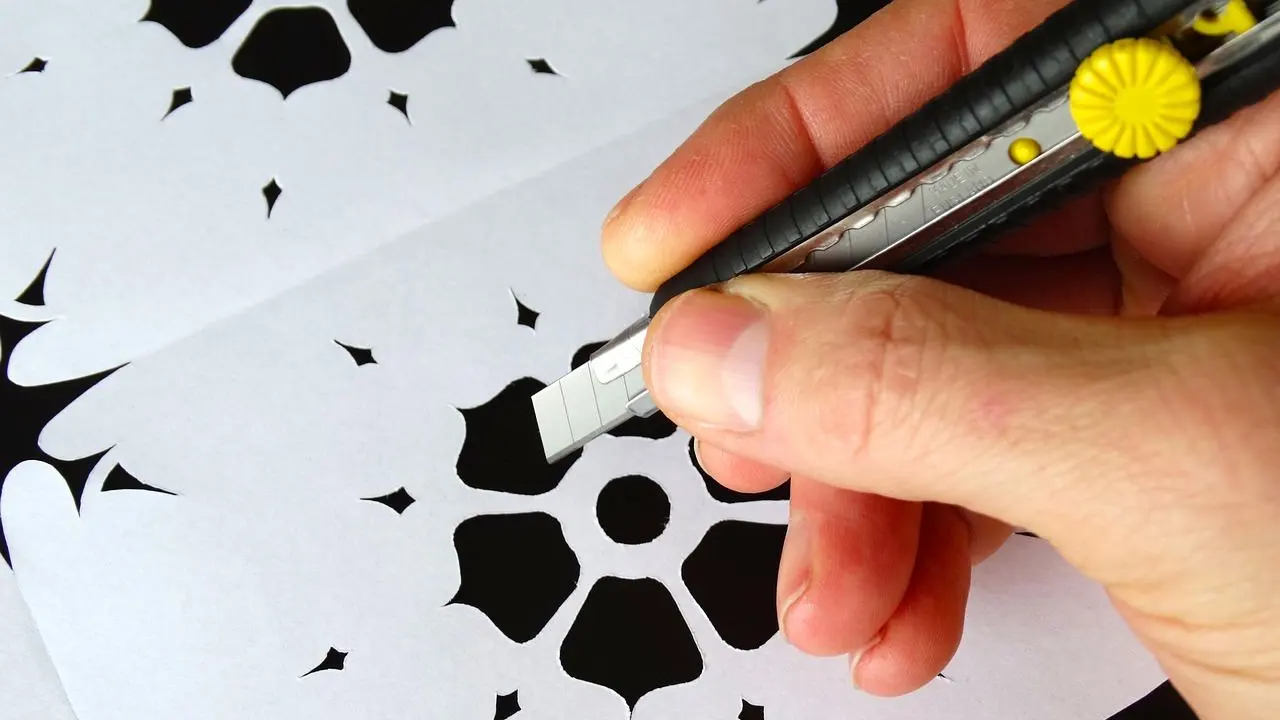
A knife lets you cut shapes out of the middle of a sheet without a starting slit. It also gives crisp corners for card fronts, stencils, paper cut art and scoring fold lines.
Different papers behave differently under the blade. Thin tissue drags and tears, while stiff card needs a sharper edge and patience. Our guide to types of craft paper explains how weight and fibre change the way a cut feels.
Types of craft knives
Most knives you will meet fall into a few groups. Here is how they differ for papercraft:
- Precision knives (X-Acto style): slim, pen-like handles with replaceable blades, built for detailed work. This is the usual choice for card making.
- Utility knives: general-purpose handles, often with retractable blades. They suit thicker jobs such as foam core, not fine paper detail.
- Heavy-duty and specialty knives: rugged fixed-blade designs for thick materials like mat board.
- Scalpel-style handles, rotary cutters and glass-blade knives: composite and specialty types that cover niche tasks.
For most paper projects, a precision knife gives the best control. A utility knife is better kept for cutting boards and packaging.
Choosing the right blade for paper
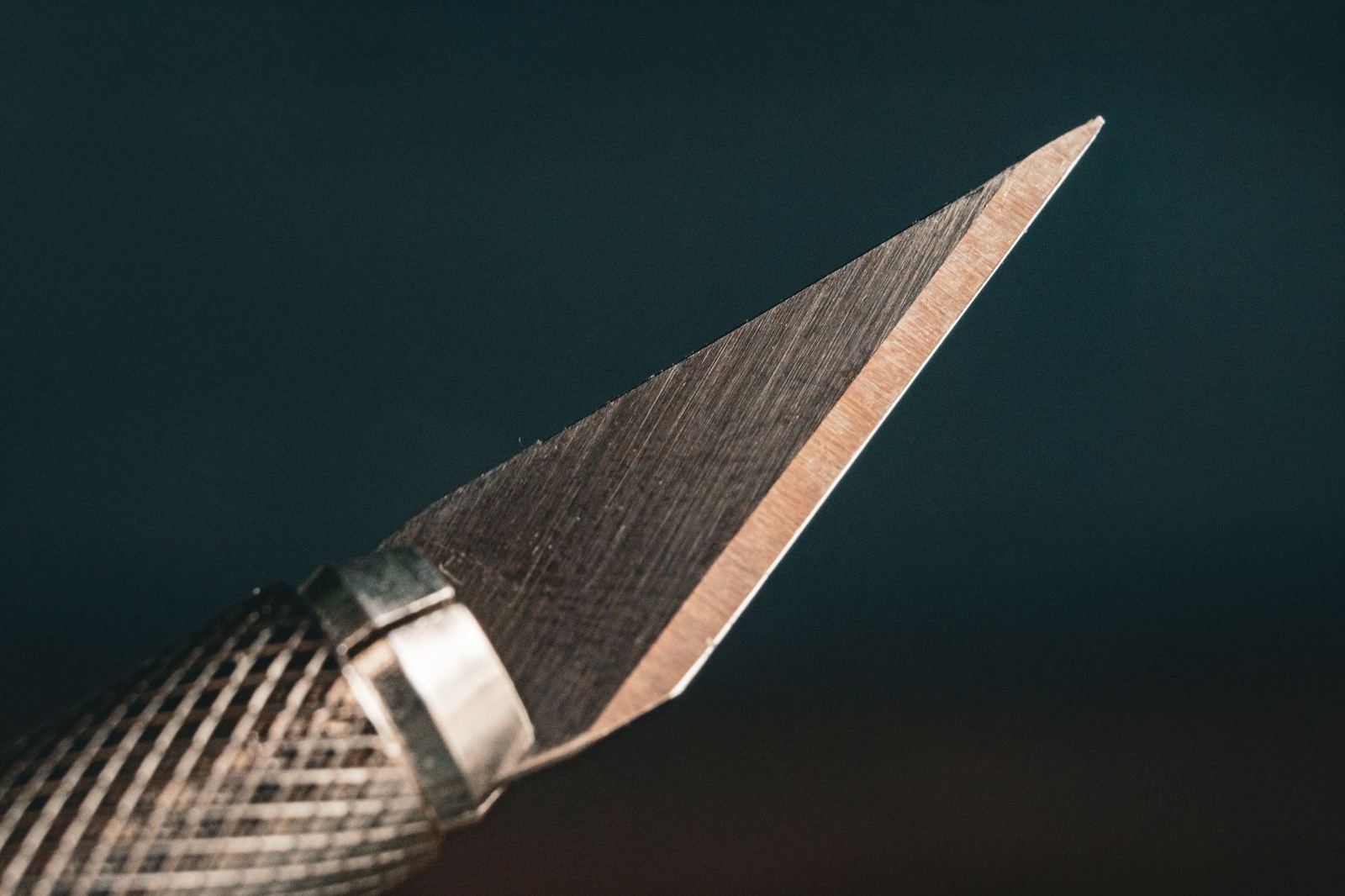
The blade shape matters more than the handle brand. Retailer guidance lists the #11 fine point as perfect for paper cutting and scoring, and recommends it for paper in its material chart.
Other shapes have their place, but they are not first choices for paper. One guide lists a larger fine point for vinyl decals and tiny curved blades for ultra-fine stencil cutting.
Check the blade pack’s compatibility list for your specific handle. Handles are not always interchangeable, so check the pack before buying.
How to cut paper safely and cleanly
A few habits can reduce the risk of slips. Work on a self healing cutting mat so the blade never meets your table and the tip stays sharper for longer.
- Draw or print your design on the paper first.
- Place a ruler or template where the blade will travel, and keep your fingers well behind it.
- Cut with light pressure, and make a second pass for thicker card instead of pushing hard.
- Turn the paper, not the knife, when you reach a curve.
- Cap the knife when you pause.
On curves, one guide puts it simply: rotate paper, not your knife, for smooth cuts. This keeps the blade angle steady and your wrist relaxed.
Rulers and grip
Choose a ruler that survives the blade. One craft writer says the best option is metal with a cork bottom, because cork helps stop the ruler slipping, and a wood or plastic ruler can get sliced.
The same advice covers your grip: hold the knife at least a half inch above where the blade is. Treat the edge of the ruler as a safety line, and keep your free hand behind it.
Keeping blades sharp and changing them
A sharp blade is the safer one. Blade-maker guidance says dull blades require more pressure, which increases the chance of slipping, and they tear paper and leave frayed edges.
Change the blade when cuts start to drag or fuzz. Heavier cutting wears the tip faster, so swap it before a final cut on a nice sheet of card.
To change a blade on a typical hobby knife:
- Put the knife on a stable surface with the blade pointing away from you.
- Twist the knurled metal collar counterclockwise to loosen the chuck.
- Use tweezers or needle-nose pliers to pull the old blade out of the slot.
- Slide the new blade in with the sharp edge facing the right way, then tighten the collar.
Keep your fingers away from the sharp edge throughout. Store used blades in a hard container, not loose in a drawer.
Common mistakes to avoid
Most ruined cards come from a handful of habits. Spotting them early saves paper, blades and fingertips.
- Pressing too hard: forcing one deep cut makes the blade wander. Light passes keep the line where you drew it.
- Cutting toward your hand: always pull the knife away from your body, and keep your free hand outside the blade’s path.
- Using a wobbly ruler: a ruler that slides turns a straight line into a curve. Hold it firmly, or choose one with a cork back.
- Keeping a tired blade: a dragging edge tears fibres. Swap it out rather than pushing on.
- Leaving the knife loose: a bare blade rolling across a desk is an accident waiting to happen. Cap it before putting it down.
Setting up a comfortable cutting space
Good light and a steady surface make precision cutting easier. Sit so your forearm can move in a straight line, and keep scrap paper nearby for test cuts.
Try a new blade on offcuts first, especially with a paper you have not used before. If the blade snags, slow down and use lighter pressure, or change to a fresh edge.
Finish by wiping the blade and capping the knife before you tidy up. Keeping your cutting area uncluttered means fewer surprises when you reach for a tool.
Frequently asked questions
What is the best craft knife for paper?
Show answer
A slim precision knife with replaceable blades is the usual pick, fitted with a fine-point #11 blade. Comfort in your hand matters as much as the brand.
Can I use a utility knife instead?
Show answer
You can for rough trims and thick board, but the blade is bulkier. For detailed paper work, a precision knife gives cleaner corners and curves.
How often should I change the blade?
Show answer
There is no fixed schedule. Change it when cuts drag, tear or fray, since a dull blade needs more pressure and slips more easily.
Do I need a cutting mat?
Show answer
Yes, a mat protects your table and keeps the blade tip from meeting a hard surface.
Is a metal ruler necessary?
Show answer
It is strongly recommended. A blade can nick wood or plastic edges, which can send the next cut off line.