Wondering which paper crafts for kids are safe to try at home? Choose simple folding, tearing and gluing projects, use blunt-tip scissors, pick labelled child-safe supplies, and stay close while children work.
This guide is part of our papercraft section.
| Item | Value |
|---|---|
| ACMI AP Seal: who it is for | Kids in sixth grade or younger |
| ACMI CL Seal: who it is for | Kids in seventh grade or older |
| Products with the CL Seal | Never give to children in sixth grade or younger |
| Labeling standard behind the seals | ASTM D 4236 |
These details come from the Art and Creative Materials Institute classroom safety page. Seal programs and rules can change, so check the source before you rely on them.
Why paper is a good starting point for children
Paper is cheap, forgiving and easy to find, which makes it the most relaxed craft material for a child’s first projects. A crumpled sheet costs almost nothing, so mistakes do not feel like a big deal.
Paper also teaches useful skills without much setup. Children practise fine motor control by tearing, folding, cutting and sticking, and they learn to follow steps and finish something they can hold.
If you are a beginner yourself, you can learn alongside them. Our guide to paper crafts for beginners covers the basic tools and techniques that work for adults and children alike.
Set up a safe craft space
A little preparation can help reduce craft-table risks. Spend a few minutes on the space before anyone picks up a pair of scissors.
- Cover the table with scrap paper, a cloth or a wipeable mat.
- Put out only the supplies needed for the project, so little hands are not tempted by everything else.
- Keep sharp tools, craft knives and hot glue guns out of reach and out of sight.
- Have a damp cloth and a bin ready, and keep food and drinks away from glue and paint.
- Wash hands when the project is finished.
Sit with younger children for the whole session. Close supervision matters more than any product label.
Choose safer supplies
Look for products made for children and read the packaging. The Art and Creative Materials Institute runs a seal programme: its page says to check for the AP Seal on creative products for kids in sixth grade or younger.
The same page says the CL (cautionary labeling) seal is for kids in seventh grade or older, and it adds: “Never give children in sixth grade or younger a product with the CL Seal.” The products are certified to be labeled under the standard ASTM D 4236.
A seal is a useful guide, not a guarantee. This site is independent and not connected to any seal programme or brand, so treat these labels as one input and use your own judgement.
Quick supply checklist
- Glue: washable school glue sticks or white glue, applied in small dots.
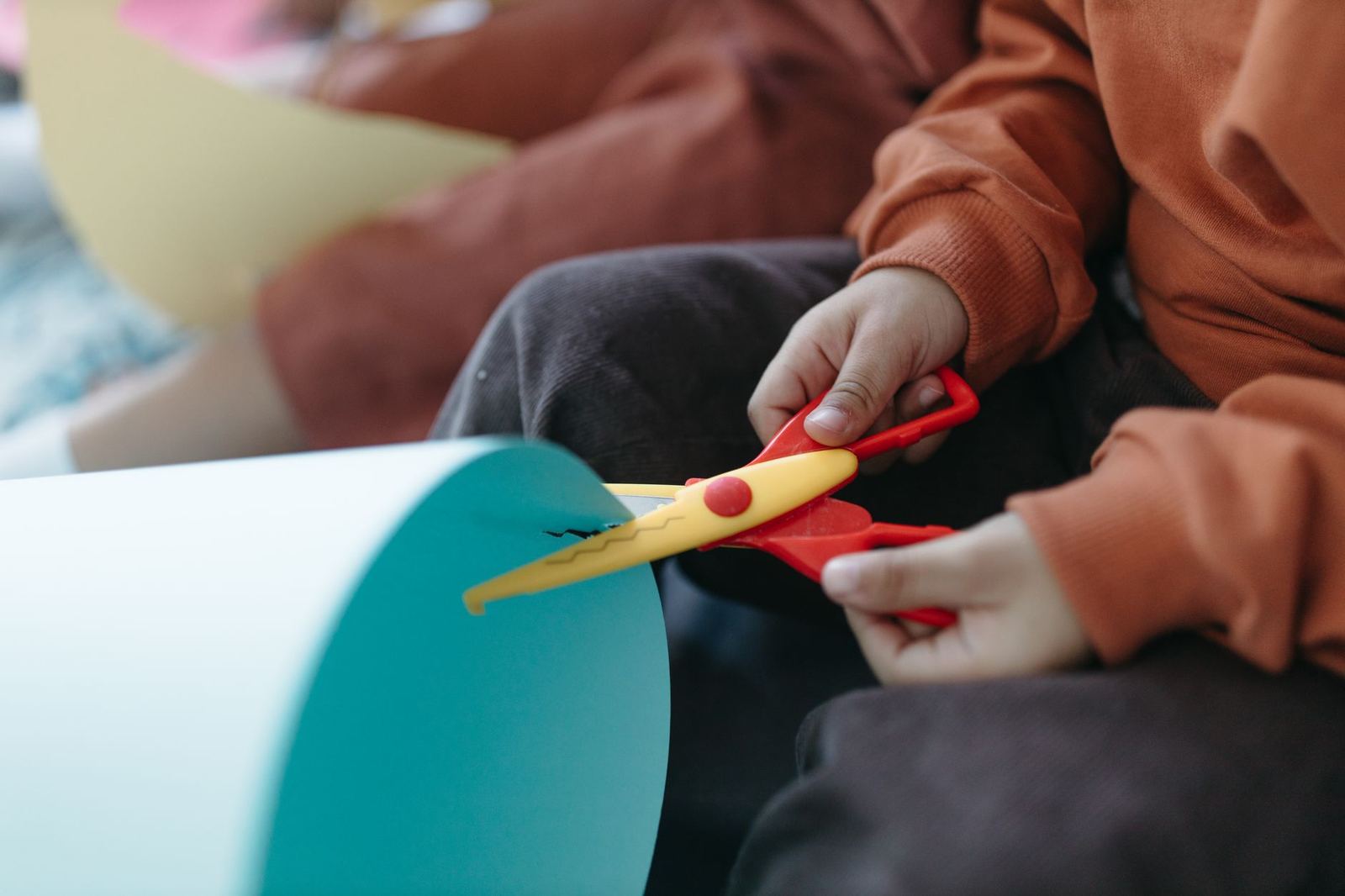
- Scissors: blunt-tip, sized for small hands, with a left-handed pair if needed.
- Paper: construction paper, printer paper, old magazines, tissue paper and cardstock.
- Colour: crayons, washable markers and child-safe paints.
- Extras: large stickers and pom-poms only for children who no longer put things in their mouths.
Small parts such as beads, googly eyes and buttons can be a choking hazard for toddlers. For the youngest children, stick to large pieces and keep small items out of the room.
Simple paper crafts by age group
Match the project to what a child can do comfortably. A task that is too hard turns into frustration quickly.
Toddlers and very young children
Think big, messy and adult-led. Tearing paper into pieces and sticking it onto a sheet makes a lovely collage, and crumpling tissue paper into a picture is just as good.
- Torn-paper rainbow collage
- Crayon rubbings on leaves under thin paper
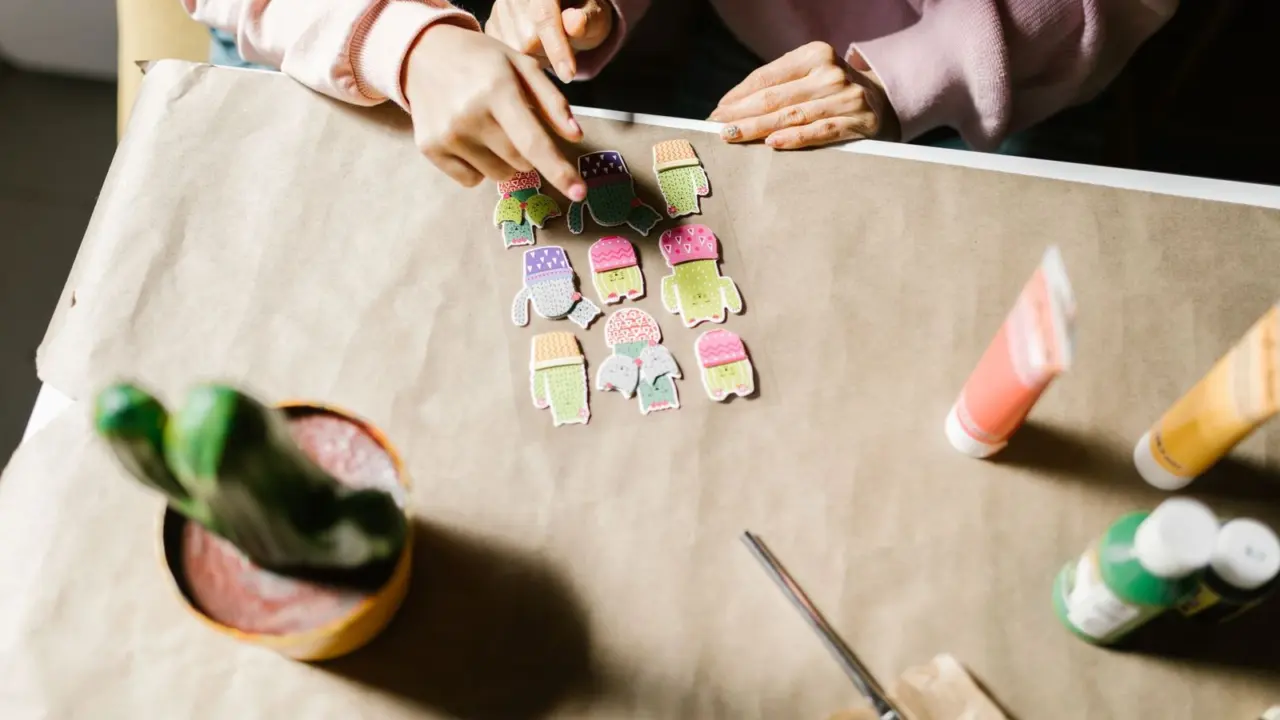
- Sticker pictures on a large sheet
Preschool and early school age
Children at this stage can use blunt scissors with help and start to follow simple steps. Cutting along thick lines is a great first goal.
- Paper chains made from strips and glue sticks
- Paper plate animals with cut and glued shapes
- Handprint cards on folded cardstock
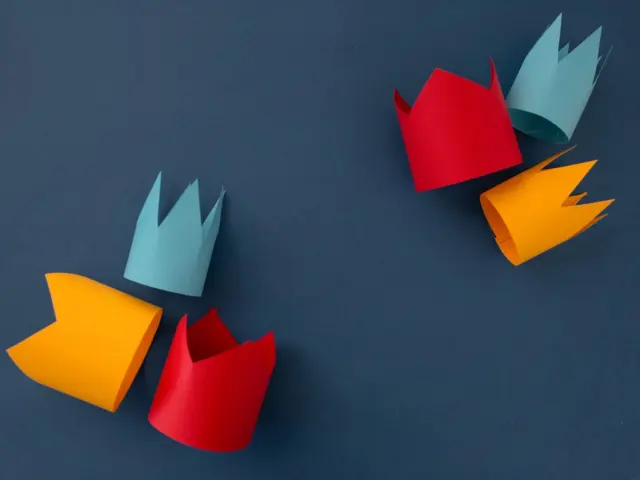
- Simple folded paper hats or boats
Older children
Older children can handle more detail and patience. Folding and layering projects give them room to be proud of neat work.
- Simple origami such as cups, fortune tellers and jumping frogs
- Woven paper placemats and baskets
- Pop-up cards with basic cut-and-fold mechanisms
- Paper lanterns and garlands
Cutting, gluing and mess: practical tips
Teach scissor skills one step at a time. Show a child how to hold the paper with the helping hand, keep fingers away from the blades, and cut away from the body.
For glue, a thin layer holds paper better than a thick one and dries faster. Show children that small dots of glue are enough, which saves mess and helps reduce paper wrinkling.
When projects need wet materials, a gentle step up is papier-mâché. Our guide to paper mache for beginners explains the method, and older children can take part once an adult has mixed the paste.
- Choose a project and gather every supply first.
- Demonstrate one step, then let the child try it.
- Praise effort and let the result look like a child made it.
- Tidy together and put sharp tools away straight afterwards.
Recycled paper ideas that cost nothing
Many of the best projects use paper that would otherwise go in the bin. Cereal boxes, newspaper, junk mail, wrapping paper and cardboard tubes all work well, and children enjoy turning rubbish into something useful.
- Cardboard tube binoculars, taped together and decorated
- Newspaper hats and fans, folded with an adult’s help
- Magazine mosaics, made from torn colour scraps
- Greeting cards made from saved wrapping paper
Check recycled paper for staples, tape and sharp edges before handing it over. Reusing paper also shows children that a craft does not need a shopping trip.
Keeping it fun and low-pressure
The point of a craft session is the doing, not a perfect result. Let children choose colours and decide what their creation will be, even if the giraffe ends up purple.
Short sessions work best. When interest fades, stop, display what they made, and come back another day.
Frequently asked questions
What paper crafts are safest for young children?
Show answer
Tearing, crumpling, sticking and crayon work are the safest, because they need no cutting. Add blunt scissors once a child can control them, and always supervise.
Is non-toxic glue safe if a child tastes it?
Show answer
Labels reduce risk but do not make glue food. Keep an eye on young children, use only small amounts, and ask a pharmacist or doctor if a child swallows a lot.
Do children need special scissors?
Show answer
Blunt-tip scissors sized for small hands are a good choice. They are not risk-free, so teach safe grip and keep fingers clear of the blades.
What does the AP Seal on art supplies mean?
Show answer
According to the Art and Creative Materials Institute page cited above, the AP Seal is the one to check for on creative products for kids in sixth grade or younger. Check the packaging in the shop.